Détail de l'éditeur
SPRINGER |
Documents disponibles chez cet éditeur (4)


 Affiner la recherche Interroger des sources externes
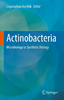
Titre : Actinobacteria, Microbiology to Synthetic Biology Type de document : texte imprimé Auteurs : Satya P.Singh, Auteur Editeur : SPRINGER Année de publication : 2022 Importance : 276 p Format : 14X24 cm ISBN/ISSN/EAN : 978-981-16-5834-1 Note générale : sommaire
Chapter 1. Actinomycetes: Microbiology to Systems Biology. - Chapter 2. Diversity of actinobacteria in various habitats. - Chapter 3. Traditional Screening and Genome Guided Screening of Natural Products from Actinobacteria. - Chapter 4. The relationship between actinobacteria and rice. - Chapter 5.Non-ribosomally and ribosomally synthesized bioactive peptides - NRPS and RiPPs from actinobacteria. - Chapter 6. Genome Data Mining, Chemistry and Bioactivity of Sesquiterpenes from Actinobacteria. - Chapter 7. Genome Data Mining, Chemistry and Bioactivity of Sesquiterpenes from Actinobacteria. - Chapter 8. Cloning and Heterologous expression of Natural products from Actinobacteria. - Chapter 9. Synthetic Biology and Metabolic Engineering in Actinobacteria for Natural Product Production. - Chapter 10. CRISPR ERA: CURRENT APPLICATIONS AND FUTURE PERSPECTIVES ON ACTINOBACTERIA. - Chapter 11. Uncultured Actinobacteria and Reverse engineering and Artificial Intelligence role in future. - Chapter 12. Cultivation and Diversity of Marine Actinomycetes: Molecular Approaches and Bioinformatics Tools. - Chapter 13. Antimicrobial Potential and Metabolite Profiling of Marine Actinobacteria. - Chapter 14. Pharmacology of FDA Approved Medicines from Actinobacteria.Langues : Anglais (eng) Catégories : Microbiologie Mots-clés : Synthetic Biology Bioinformatics Index. décimale : 579 - Microbiologie Résumé : This book summarizes the basics of actinobacteria, from microbiology to synthetic biology. It focuses on diversity, NRPS, sesquiterpenes, lantipeptide, bioinformatics apparatuses, cloning, CRISPR, reverse engineering, FDA supported medications, and marine actinobacteria. It also covers the latest trends in drug discovery from actinobacteria, and introduces several recently developed bioinformatics and synthetic biology tools to explore new antibiotics from actinobacteria. Many natural products such as polyketides, isoprenoids, phenazines, peptides, indolocarbarbazoles, sterols, and others have been isolated and characterized from actinobacteria. Some products are synthesized by the non-ribosomal peptide synthetases (NRPSs), polyketide synthases (PKSs), or other functional genes. Although genome sequencing has uncovered the differing qualities of these chemicals, recognizing new items and their biosynthetic pathways is still under examination. Cryptic metabolic pathways have been explored using molecular techniques or culture-dependent approaches. In recent years, researchers' primary interest is to identify the specific conditions or agents that wake the cryptic antibiotics. Several bioinformatics and synthetic biology tools were developed to explore new antibiotics from actinobacteria. The book comprises 14 chapters with different aspects of application and utilization of actinomycetes from the microbiology; systems biology, pharmacology of natural products, bioinformatics, actinomycete and its diversity, CRISPR, artificial Intelligence, synthetic biology, metabolic engineering, expressional studies, and biosynthetic gene clusters. The book delivers useful information on actinomyces to researchers, novices in genome designing, specialists, clinicians, policymakers, and professionals.
Actinobacteria, Microbiology to Synthetic Biology [texte imprimé] / Satya P.Singh, Auteur . - SPRINGER, 2022 . - 276 p ; 14X24 cm.
ISBN : 978-981-16-5834-1
sommaire
Chapter 1. Actinomycetes: Microbiology to Systems Biology. - Chapter 2. Diversity of actinobacteria in various habitats. - Chapter 3. Traditional Screening and Genome Guided Screening of Natural Products from Actinobacteria. - Chapter 4. The relationship between actinobacteria and rice. - Chapter 5.Non-ribosomally and ribosomally synthesized bioactive peptides - NRPS and RiPPs from actinobacteria. - Chapter 6. Genome Data Mining, Chemistry and Bioactivity of Sesquiterpenes from Actinobacteria. - Chapter 7. Genome Data Mining, Chemistry and Bioactivity of Sesquiterpenes from Actinobacteria. - Chapter 8. Cloning and Heterologous expression of Natural products from Actinobacteria. - Chapter 9. Synthetic Biology and Metabolic Engineering in Actinobacteria for Natural Product Production. - Chapter 10. CRISPR ERA: CURRENT APPLICATIONS AND FUTURE PERSPECTIVES ON ACTINOBACTERIA. - Chapter 11. Uncultured Actinobacteria and Reverse engineering and Artificial Intelligence role in future. - Chapter 12. Cultivation and Diversity of Marine Actinomycetes: Molecular Approaches and Bioinformatics Tools. - Chapter 13. Antimicrobial Potential and Metabolite Profiling of Marine Actinobacteria. - Chapter 14. Pharmacology of FDA Approved Medicines from Actinobacteria.
Langues : Anglais (eng)
Catégories : Microbiologie Mots-clés : Synthetic Biology Bioinformatics Index. décimale : 579 - Microbiologie Résumé : This book summarizes the basics of actinobacteria, from microbiology to synthetic biology. It focuses on diversity, NRPS, sesquiterpenes, lantipeptide, bioinformatics apparatuses, cloning, CRISPR, reverse engineering, FDA supported medications, and marine actinobacteria. It also covers the latest trends in drug discovery from actinobacteria, and introduces several recently developed bioinformatics and synthetic biology tools to explore new antibiotics from actinobacteria. Many natural products such as polyketides, isoprenoids, phenazines, peptides, indolocarbarbazoles, sterols, and others have been isolated and characterized from actinobacteria. Some products are synthesized by the non-ribosomal peptide synthetases (NRPSs), polyketide synthases (PKSs), or other functional genes. Although genome sequencing has uncovered the differing qualities of these chemicals, recognizing new items and their biosynthetic pathways is still under examination. Cryptic metabolic pathways have been explored using molecular techniques or culture-dependent approaches. In recent years, researchers' primary interest is to identify the specific conditions or agents that wake the cryptic antibiotics. Several bioinformatics and synthetic biology tools were developed to explore new antibiotics from actinobacteria. The book comprises 14 chapters with different aspects of application and utilization of actinomycetes from the microbiology; systems biology, pharmacology of natural products, bioinformatics, actinomycete and its diversity, CRISPR, artificial Intelligence, synthetic biology, metabolic engineering, expressional studies, and biosynthetic gene clusters. The book delivers useful information on actinomyces to researchers, novices in genome designing, specialists, clinicians, policymakers, and professionals.
Réservation
Réserver ce document
Exemplaires(1)
Code-barres Cote Support Localisation Section Disponibilité 579-25.1 579-25.1 Livre Bibliothèque FSNV Documentaires Disponible Documents numériques
579-25_Actinobacteria,_Microbiology_to_Synthetic_Biology.jpgImage Jpeg
Titre : Decision aids for selection problems Type de document : texte imprimé Auteurs : David L.Olson, Auteur Editeur : SPRINGER Année de publication : 1996 ISBN/ISSN/EAN : 978-1-4612-8459-8 Langues : Anglais (eng) Catégories : Chimie analytique Index. décimale : 543 - Chimie analytique Résumé : One of the most important tasks faced by decision-makers in business and government is that of selection. Selection problems are challenging in that they require the balancing of multiple, often conflicting, criteria. In recent years, a number of interesting decision aids have become available to assist in such decisions.
The aim of this book is to provide a comparative survey of many of the decision aids currently available. The first chapters present general ideas which underpin the methodologies used to design these aids. Subsequent chapters then focus on specific decision aids and demonstrate some of the software which implement these ideas. A final chapter provides a comparative analysis of their strengths and weaknesses.Note de contenu : Table des matières:
Introduction 1
Multiple Criteria Decision Making 2
Value 4
Software Sources 7
References 8
Developing Criteria Hierarchies 9
Attributes 11
Suggestions for Cases where Preferential Independence is Absent 12
Automation Example 89
Nuclear Dump Site Selection 92
Conclusions 94
References 95
Outranking Methods 96
Cellular Manufacturing Example 98
Automation Example 101
Nuclear Dump Site Selection ELECTRE II 106
Energy Hierarchies 13
Conclusions 18
Multiattribute Utility Theory 19
Multiple Attribute Utility Theory 20
Tradeoff Analysis 22
Nuclear Dump Site Selection 26
House Selection 28
Conclusions 32
References 33
SMART 34
Independence 36
House Selection Example 39
SMARTS 42
Nuclear Site Selection with SMARTS 44
In this case the recommended site is Rock Springs 45
House Selection Example Using SMARTER 46
Summary 47
References 48
The Analytic Hierarchy Process 49
Hierarchy Development 50
Subjective Pairwise Comparisons 51
Calculation of Implied Weights 52
Consistency Measure 53
Synthesis 55
Calculations for the Nuclear Waste Disposal Siting Problem 56
Calculations for the Housing Selection Decision 60
RealWorld Applications of AHP 61
Computer Support for AHP 65
Summary 66
References 67
Geometric Mean Technique 69
REMBRANDT 71
Nuclear Disposal Site Selection Problem 73
House Selection Calculations 76
References 80
Preference Cones 81
Procedure 82
Basing Objective on Current Best Choice 83
Basing Objective on Worst Choice to Date 84
Adjacency Formulation 85
Basing Objective on Current Best Choice 86
Basing Objective on Worst Choice to Date 88
PROMETHEE 109
GAIA Output 114
Nuclear Dump Site Selection PROMETHEE 115
Applications of Outranking Methods 117
References 118
ZAPROS 119
Demonstration Model 120
Nuclear Dump Site Selection 127
House Selection 128
Conclusions 130
Input Files 131
AspirationLevel Interactive Model 134
Nuclear Dump Site Selection 136
Cellular Manufacturing Example 141
Summary 143
References 144
Visual Interactive Method 145
VIMDA Procedure 146
Nuclear Dump Site Selection 147
Cellular Manufacturing Example 148
Summary 149
References 150
Models with Uncertain Estimates 151
Parking Example 152
Nuclear Waste Disposal Siting Problem 153
Uncertain Value Contributions 154
House Buying Example 155
HIPRE 3+ 157
Parking Example 158
Summary 160
References 161
Comparisons 162
Task Dimensionality 163
Task Uniqueness 165
Human Subject Responses 168
Aid to Decision Maker Learning 169
Conclusion 172
Bibliography 173
Author Index 189
Topic Index 193
Droits d'auteurDecision aids for selection problems [texte imprimé] / David L.Olson, Auteur . - SPRINGER, 1996.
ISBN : 978-1-4612-8459-8
Langues : Anglais (eng)
Catégories : Chimie analytique Index. décimale : 543 - Chimie analytique Résumé : One of the most important tasks faced by decision-makers in business and government is that of selection. Selection problems are challenging in that they require the balancing of multiple, often conflicting, criteria. In recent years, a number of interesting decision aids have become available to assist in such decisions.
The aim of this book is to provide a comparative survey of many of the decision aids currently available. The first chapters present general ideas which underpin the methodologies used to design these aids. Subsequent chapters then focus on specific decision aids and demonstrate some of the software which implement these ideas. A final chapter provides a comparative analysis of their strengths and weaknesses.Note de contenu : Table des matières:
Introduction 1
Multiple Criteria Decision Making 2
Value 4
Software Sources 7
References 8
Developing Criteria Hierarchies 9
Attributes 11
Suggestions for Cases where Preferential Independence is Absent 12
Automation Example 89
Nuclear Dump Site Selection 92
Conclusions 94
References 95
Outranking Methods 96
Cellular Manufacturing Example 98
Automation Example 101
Nuclear Dump Site Selection ELECTRE II 106
Energy Hierarchies 13
Conclusions 18
Multiattribute Utility Theory 19
Multiple Attribute Utility Theory 20
Tradeoff Analysis 22
Nuclear Dump Site Selection 26
House Selection 28
Conclusions 32
References 33
SMART 34
Independence 36
House Selection Example 39
SMARTS 42
Nuclear Site Selection with SMARTS 44
In this case the recommended site is Rock Springs 45
House Selection Example Using SMARTER 46
Summary 47
References 48
The Analytic Hierarchy Process 49
Hierarchy Development 50
Subjective Pairwise Comparisons 51
Calculation of Implied Weights 52
Consistency Measure 53
Synthesis 55
Calculations for the Nuclear Waste Disposal Siting Problem 56
Calculations for the Housing Selection Decision 60
RealWorld Applications of AHP 61
Computer Support for AHP 65
Summary 66
References 67
Geometric Mean Technique 69
REMBRANDT 71
Nuclear Disposal Site Selection Problem 73
House Selection Calculations 76
References 80
Preference Cones 81
Procedure 82
Basing Objective on Current Best Choice 83
Basing Objective on Worst Choice to Date 84
Adjacency Formulation 85
Basing Objective on Current Best Choice 86
Basing Objective on Worst Choice to Date 88
PROMETHEE 109
GAIA Output 114
Nuclear Dump Site Selection PROMETHEE 115
Applications of Outranking Methods 117
References 118
ZAPROS 119
Demonstration Model 120
Nuclear Dump Site Selection 127
House Selection 128
Conclusions 130
Input Files 131
AspirationLevel Interactive Model 134
Nuclear Dump Site Selection 136
Cellular Manufacturing Example 141
Summary 143
References 144
Visual Interactive Method 145
VIMDA Procedure 146
Nuclear Dump Site Selection 147
Cellular Manufacturing Example 148
Summary 149
References 150
Models with Uncertain Estimates 151
Parking Example 152
Nuclear Waste Disposal Siting Problem 153
Uncertain Value Contributions 154
House Buying Example 155
HIPRE 3+ 157
Parking Example 158
Summary 160
References 161
Comparisons 162
Task Dimensionality 163
Task Uniqueness 165
Human Subject Responses 168
Aid to Decision Maker Learning 169
Conclusion 172
Bibliography 173
Author Index 189
Topic Index 193
Droits d'auteurRéservation
Réserver ce document
Exemplaires(1)
Code-barres Cote Support Localisation Section Disponibilité 543-02.1 543-02.1 Livre Bibliothèque FSNV Documentaires Disponible Documents numériques
543-02.1.jpgImage Jpeg
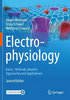
Titre : Electrophysiology, Basics, Methods, Modern Approaches and Applications Type de document : texte imprimé Auteurs : Rettinger Jurgen, Auteur Editeur : SPRINGER Année de publication : 2.Ed-2022 Importance : 213 p Format : 15x25 cm ISBN/ISSN/EAN : 978-3-030-86484-2 Note générale : sommaire
Chapter 1. Introduction
Chapter 2. Basics Theory
Chapter 3. Basics: Methods
Chapter 4. Application of the Voltage-Clamp Technique
Chapter 5. Ion-selective Channels
Chapter 6. Theory of Excitability
Chapter 7. Carrier-mediated Transport
Chapter 8. Examples of Application of the Voltage-Clamp Technique
Chapter 9. Appendix.Langues : Anglais (eng) Mots-clés : Electrophysiology Index. décimale : 537 - Electricité et électronique Résumé : This updated and revised textbook presents a broad overview on topics concerning cellular electrophysiology - ranging from bioelectric phenomena recognized as far back as ancient Egypt to popular topics on the dangers of electrosmog. Without sacrificing scientific precision, this clear and concise work presents on the one hand the different methods and modern applications, on the other hand the biophysical fundamentals of ion-channel and carrier proteins. Numerous and carefully selected illustrations and diagrams supplement the text. Each chapter is extended by a detailed table of Take-Home Messages. Questions at the end of each chapter allow readers to test their understanding. Each section also includes references to relevant original literature for further reading. The book offers a valuable resource for students of biology, chemistry and physics with a special interest in biophysics.
Electrophysiology, Basics, Methods, Modern Approaches and Applications [texte imprimé] / Rettinger Jurgen, Auteur . - SPRINGER, 2.Ed-2022 . - 213 p ; 15x25 cm.
ISBN : 978-3-030-86484-2
sommaire
Chapter 1. Introduction
Chapter 2. Basics Theory
Chapter 3. Basics: Methods
Chapter 4. Application of the Voltage-Clamp Technique
Chapter 5. Ion-selective Channels
Chapter 6. Theory of Excitability
Chapter 7. Carrier-mediated Transport
Chapter 8. Examples of Application of the Voltage-Clamp Technique
Chapter 9. Appendix.
Langues : Anglais (eng)
Mots-clés : Electrophysiology Index. décimale : 537 - Electricité et électronique Résumé : This updated and revised textbook presents a broad overview on topics concerning cellular electrophysiology - ranging from bioelectric phenomena recognized as far back as ancient Egypt to popular topics on the dangers of electrosmog. Without sacrificing scientific precision, this clear and concise work presents on the one hand the different methods and modern applications, on the other hand the biophysical fundamentals of ion-channel and carrier proteins. Numerous and carefully selected illustrations and diagrams supplement the text. Each chapter is extended by a detailed table of Take-Home Messages. Questions at the end of each chapter allow readers to test their understanding. Each section also includes references to relevant original literature for further reading. The book offers a valuable resource for students of biology, chemistry and physics with a special interest in biophysics.
Réservation
Réserver ce document
Exemplaires(2)
Code-barres Cote Support Localisation Section Disponibilité 537-07.1 537-07.1 Livre Bibliothèque FSNV Documentaires Disponible 537-07.2 537-07.2 Livre Bibliothèque FSNV Documentaires Disponible Documents numériques
537-07_Electrophysiology,_Basics,_Methods,_Modern_Approaches_and_Applications.jpgImage Jpeg
Titre : Environmental Microbiology Type de document : texte imprimé Auteurs : Reineke Walter, Auteur ; Michael Schlomann Editeur : SPRINGER Année de publication : 2023 Importance : 603 p Format : 15x25 cm ISBN/ISSN/EAN : 978-3-662-66546-6 Note générale : Sommaire :
P. 1. Global Environment. Climate and microorganisms
P. 33. Microorganisms, actors in the environment
P. 53. Relationship between microbial energy production and material cycles
P. 71. Carbon cycle
P. 87. Degradation of natural substances
P. 127. Environmental chemicals
P. 161. Microbial degradation of pollutants
P. 291. The microbial nitrogen cycle
P. 307. Cycles of sulfur, iron and manganese
P. 331. Heavy metals and other toxic inorganic ions
P. 349. Microorganisms at different sites: living conditions and adaptation strategies
P. 397. Microbial communities. Structural and functional analyses with classical approach
P. 421. Microbial communities. Structural and functional analyses with molecular biological approach
P. 461. Damage to inorganic materials by microbial activities, biocorrosion
P. 467. Biological wastewater treatment
P. 493. Biological exhaust air treatment
P. 523. Biological soil remediation
P.543. Biological waste treatment
P. 551. Biotechnology and environmental protection
P. 589. Food for thought
Langues : Anglais (eng) Catégories : Microbiologie Mots-clés : Microbiologie Biotechnologie General microbiology ecology Index. décimale : 579 - Microbiologie Résumé : This textbook addresses global and local environmental problems and the involvement of microorganisms in their development and remediation. In particular, methodological aspects, some of them molecular genetic, for the study of microbial communities are considered. Overall, the prominent role of microorganisms in various material cycles is presented. In addition to biochemical principles for the degradation of environmental pollutants, the use of microorganisms in environmental biotechnological processes for the purification of air, water or soil as well as in environmentally friendly production processes is discussed. The book is intended for biologists with an interest in environmental microbiological issues, but also for students of process or environmental engineering, geoecology or geology, as well as students of other environmental science disciplines. For the 3rd edition, the authors have completely revised, corrected, updated and supplemented the book. (4e de couverture)
Environmental Microbiology [texte imprimé] / Reineke Walter, Auteur ; Michael Schlomann . - SPRINGER, 2023 . - 603 p ; 15x25 cm.
ISBN : 978-3-662-66546-6
Sommaire :
P. 1. Global Environment. Climate and microorganisms
P. 33. Microorganisms, actors in the environment
P. 53. Relationship between microbial energy production and material cycles
P. 71. Carbon cycle
P. 87. Degradation of natural substances
P. 127. Environmental chemicals
P. 161. Microbial degradation of pollutants
P. 291. The microbial nitrogen cycle
P. 307. Cycles of sulfur, iron and manganese
P. 331. Heavy metals and other toxic inorganic ions
P. 349. Microorganisms at different sites: living conditions and adaptation strategies
P. 397. Microbial communities. Structural and functional analyses with classical approach
P. 421. Microbial communities. Structural and functional analyses with molecular biological approach
P. 461. Damage to inorganic materials by microbial activities, biocorrosion
P. 467. Biological wastewater treatment
P. 493. Biological exhaust air treatment
P. 523. Biological soil remediation
P.543. Biological waste treatment
P. 551. Biotechnology and environmental protection
P. 589. Food for thought
Langues : Anglais (eng)
Catégories : Microbiologie Mots-clés : Microbiologie Biotechnologie General microbiology ecology Index. décimale : 579 - Microbiologie Résumé : This textbook addresses global and local environmental problems and the involvement of microorganisms in their development and remediation. In particular, methodological aspects, some of them molecular genetic, for the study of microbial communities are considered. Overall, the prominent role of microorganisms in various material cycles is presented. In addition to biochemical principles for the degradation of environmental pollutants, the use of microorganisms in environmental biotechnological processes for the purification of air, water or soil as well as in environmentally friendly production processes is discussed. The book is intended for biologists with an interest in environmental microbiological issues, but also for students of process or environmental engineering, geoecology or geology, as well as students of other environmental science disciplines. For the 3rd edition, the authors have completely revised, corrected, updated and supplemented the book. (4e de couverture)
Réservation
Réserver ce document
Exemplaires(2)
Code-barres Cote Support Localisation Section Disponibilité 579-27.1 579-27.1 Livre Bibliothèque FSNV Documentaires Disponible 579-27.2 579-27.2 Livre Bibliothèque FSNV Documentaires Disponible Documents numériques

579-27_Environmental_Microbiology.jpgImage Jpeg